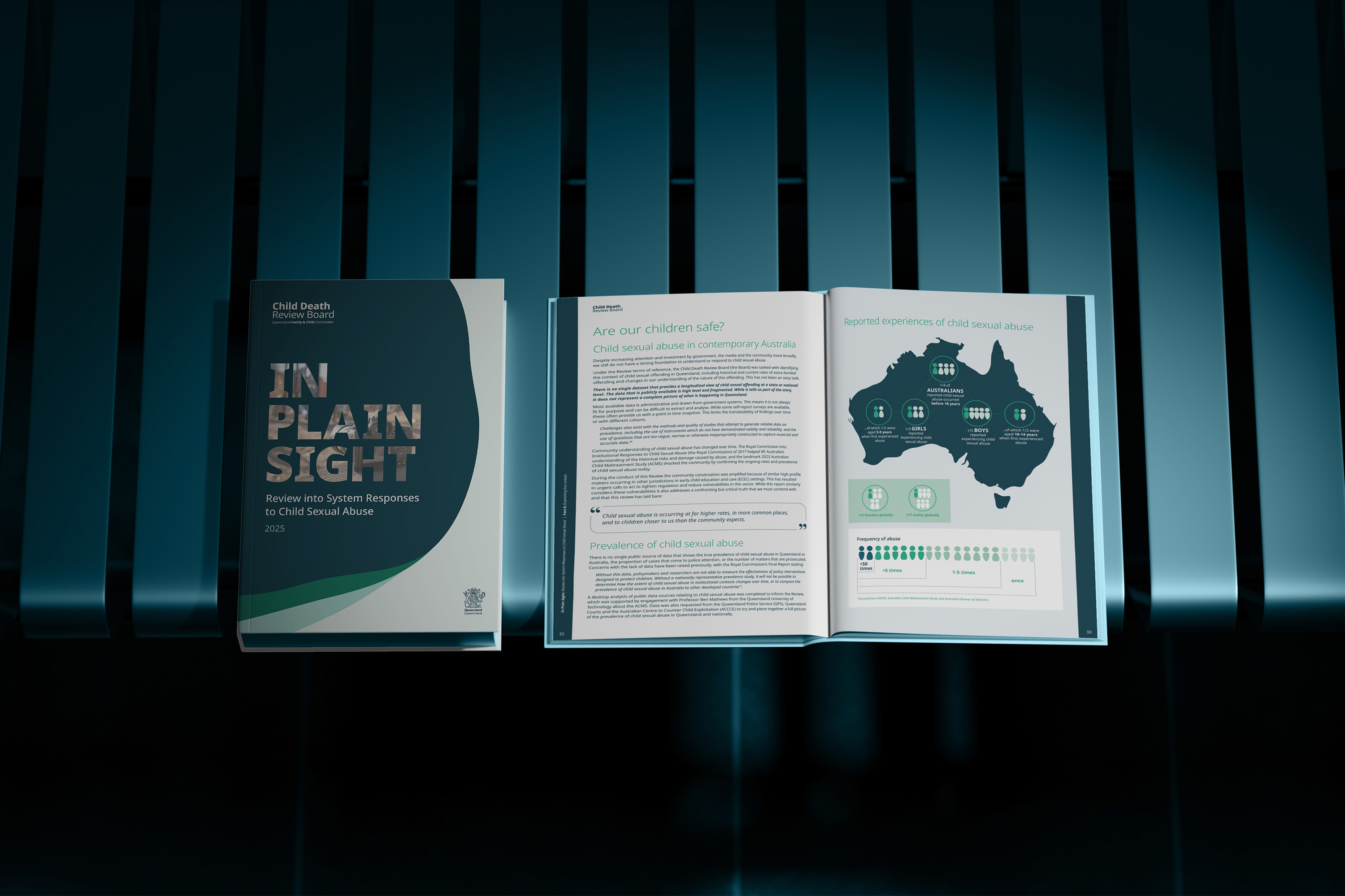
A landmark report on child sexual abuse
We partnered with the Queensland Family and Child Commission’s (QFCC) Child Death Review Board to develop In Plain Sight—a landmark report examining system responses to child sexual abuse, with a focus on early childhood education and care, police services, and the blue card system. Completed over 12 months, the review shines a light on how perpetrators can operate openly within communities—visible to systems, neighbours and institutions, yet not fully recognised for the risk they pose to children. The title reflects this uncomfortable truth, and the urgent need for systems to respond earlier and more effectively.
Challenge
This was one of the most sensitive, complex and consequential documents we have worked on. The challenge was twofold. First, the report needed to translate highly technical, confronting material into a form that could be clearly understood by parliamentarians, policymakers and the broader community—without softening its findings or diminishing its authority. Second, it needed to carry sufficient weight, both literally and figuratively, to command attention. The Board was clear: this report had to land. It had to be credible, rigorous and impossible to ignore. It needed to increase understanding of where systems failed children—and prompt meaningful action at the highest levels of government.
The spark
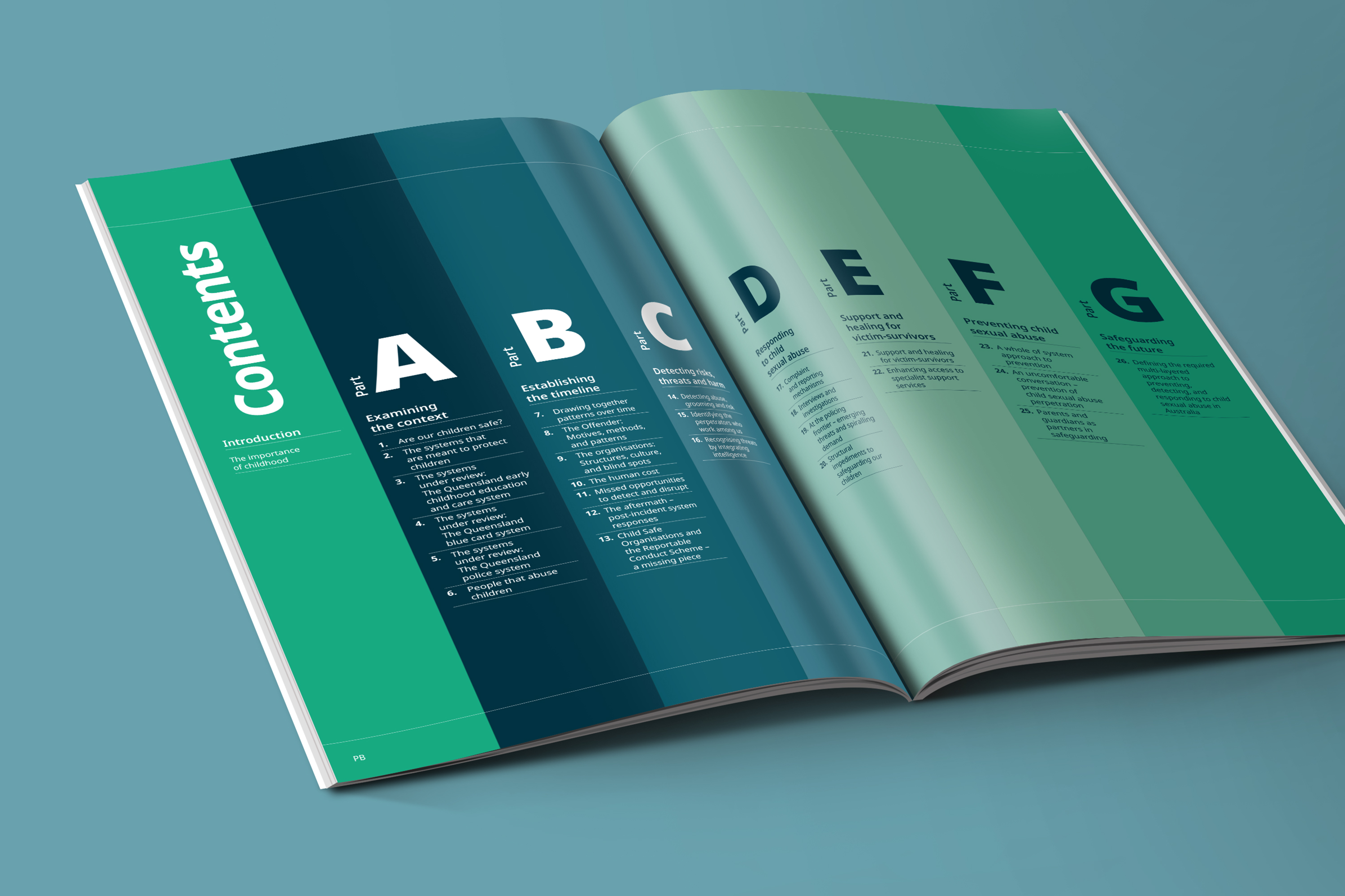
Our approach was grounded in clarity, gravity and respect for the subject matter. Working closely with the Child Death Review Board, we broke down a vast and evolving body of content into a clear, systemised structure of parts and chapters. This allowed complex findings to be navigated logically, while reinforcing the cumulative impact of the evidence.
Given the sensitivity of the material and the tight deadline, we assembled a small, senior team able to work discreetly, collaboratively and at pace. Content was often delivered in sections and revised repeatedly as findings evolved, requiring constant alignment between writing, design and review. Throughout, our focus remained on one outcome: ensuring the report could do its job—informing debate, supporting scrutiny and strengthening the case for reform.
Creative
Following a recent QFCC brand refresh, the creative challenge was to develop a look and feel that was understated yet powerful—one that respected the seriousness of the subject while reinforcing the authority of the Board. We developed and tested two design concepts before moving forward with a chosen direction.
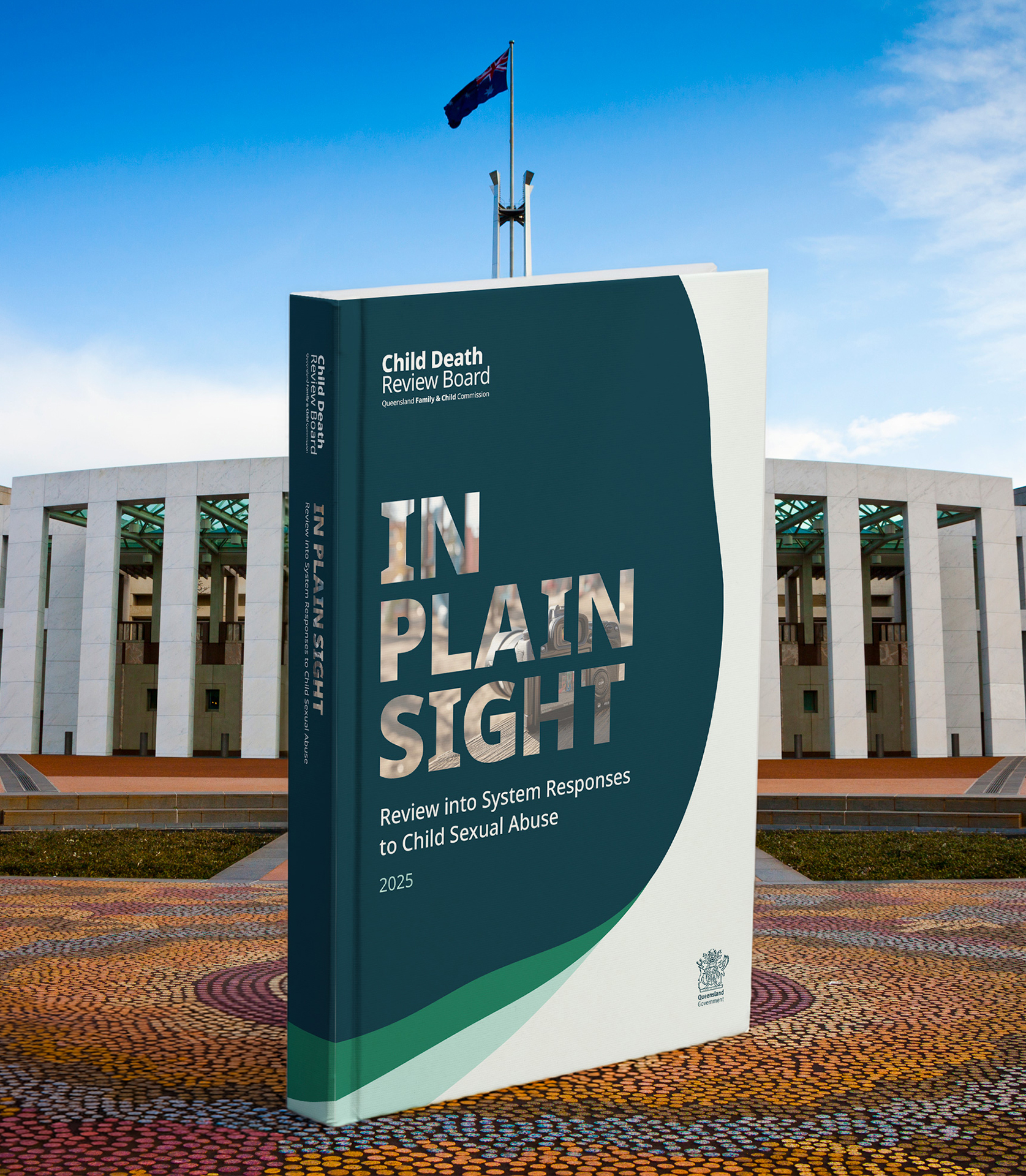
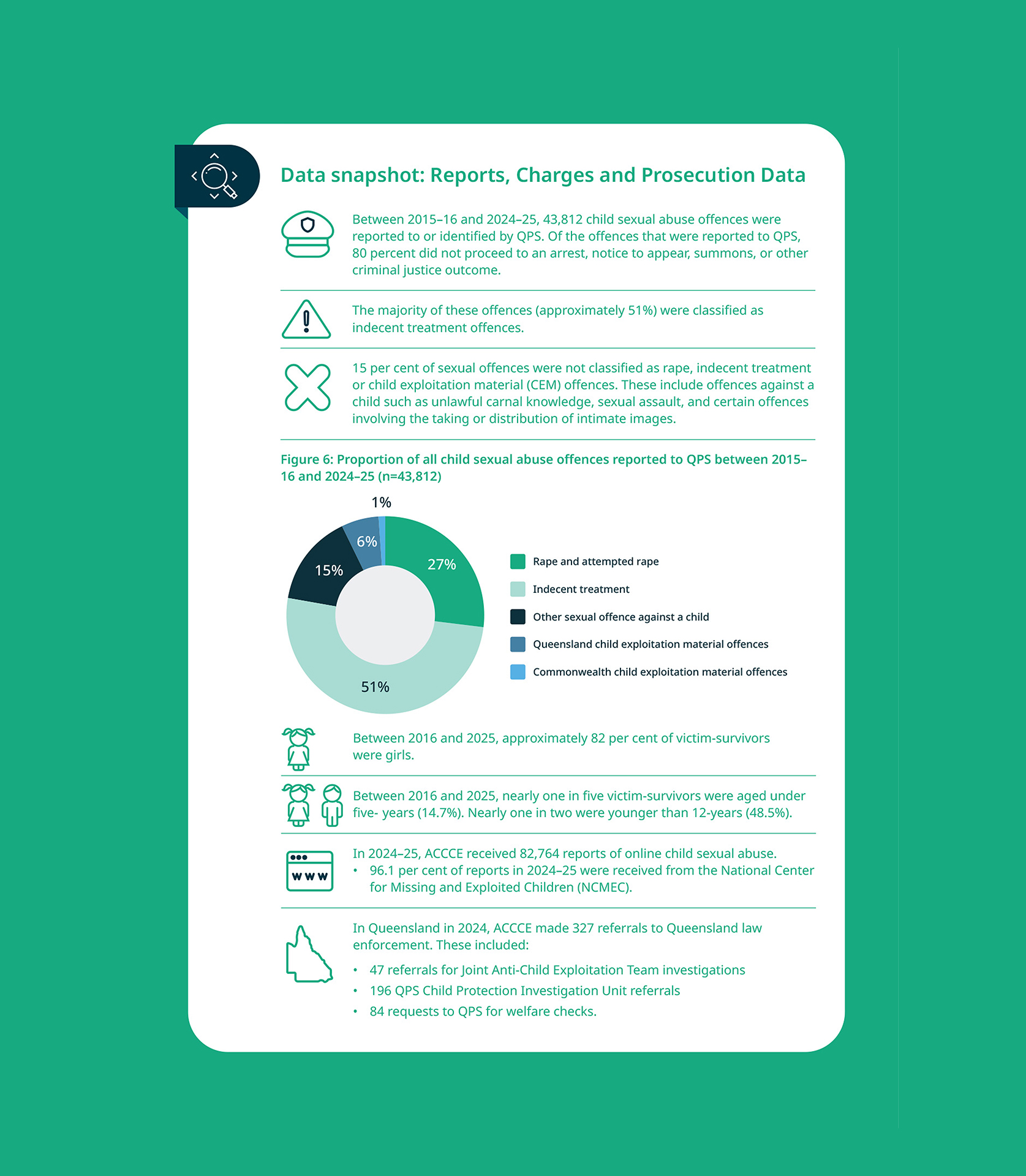
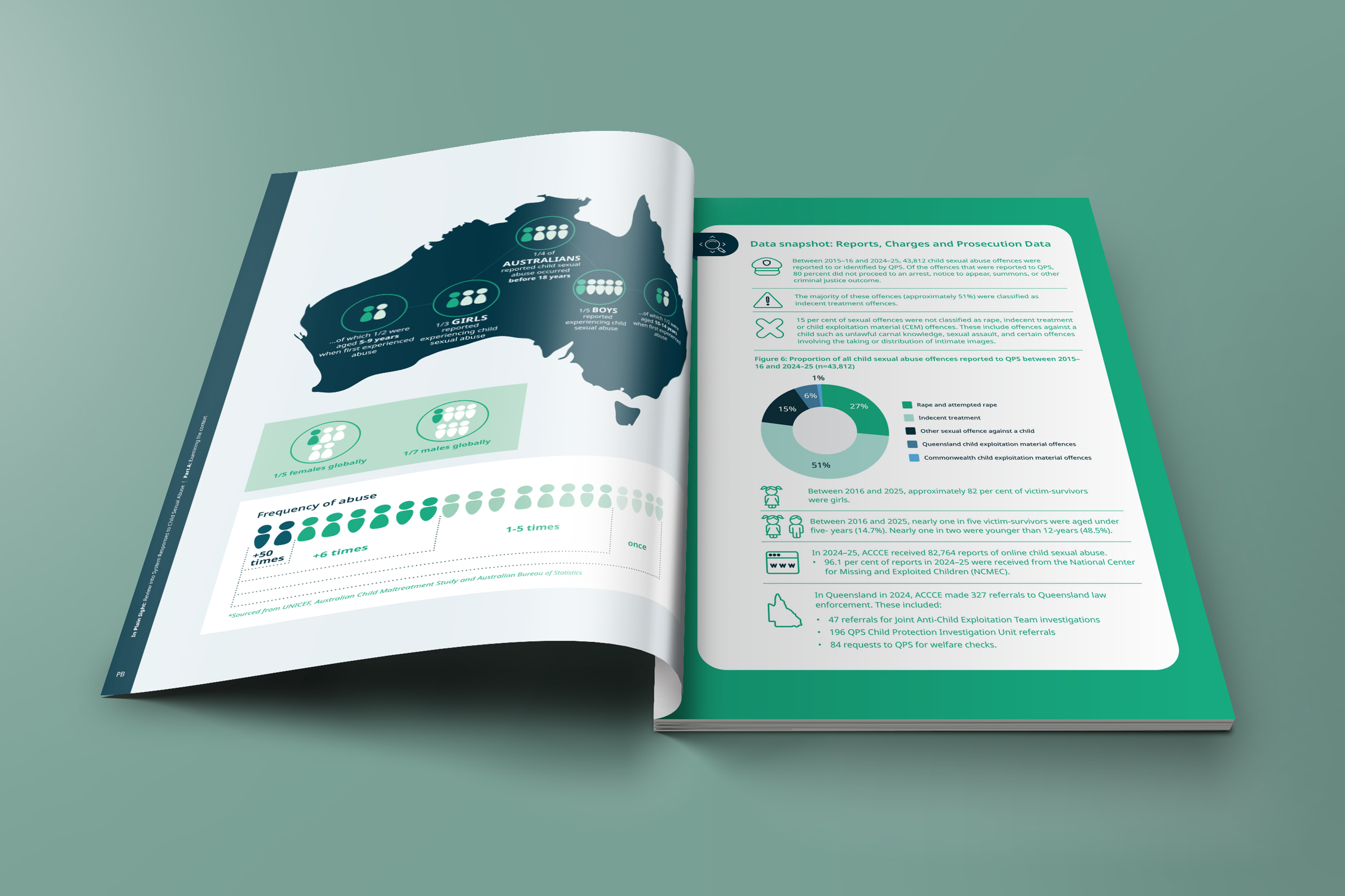
The cover, developed in co-design with the QFCC needed to stand out as the first point of contact for Members of Parliament—to ensure it conveyed immediacy, gravity and importance. Inside the report, complex timelines were designed to track the conduct of perpetrators alongside the laws, policies and procedures that could—or should—have enabled earlier intervention. These visual elements required meticulous attention to detail and multiple rounds of refinement to ensure accuracy and clarity. Design and content evolved together in tight turnaround cycles, often within 48 hours.
Our designers and project managers worked intensively to update layouts, proof content and respond to feedback, while maintaining consistency across a document exceeding 500 pages. One hundred printed copies were produced for tabling in Parliament—each designed to quite literally make an impact when landing on the table with the loud thud it deserved.
Outcome
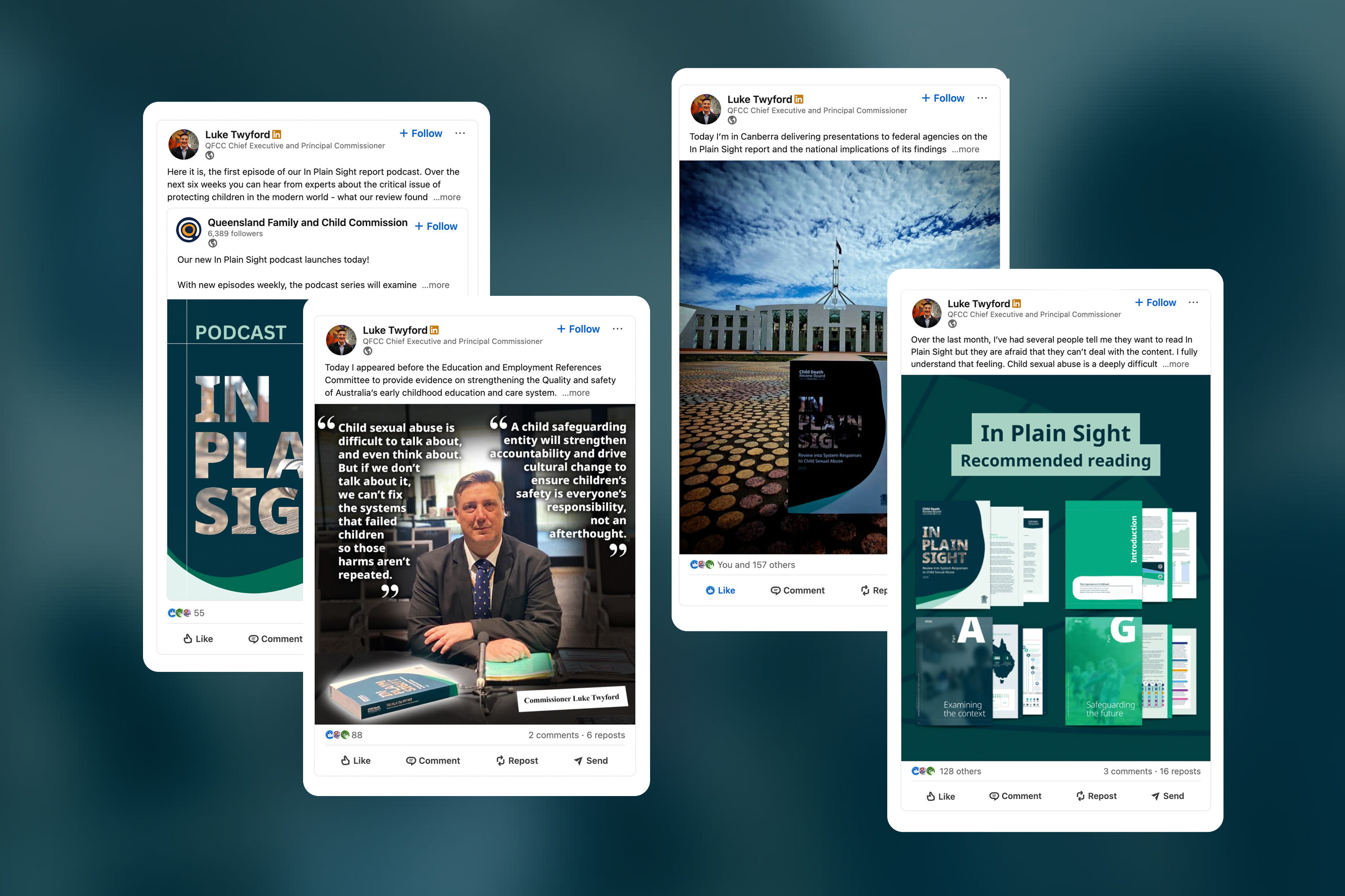
In Plain Sight has helped expose critical gaps and weaknesses in the laws, policies, procedures and practices intended to protect children from sexual abuse. The report's scale, clarity and authority reinforced the seriousness of its findings by presenting the evidence in a way that was both accessible and uncompromising, and strengthened understanding and supported informed debate about system reform. We are proud to have played a role in ensuring this important work was not only completed on time but delivered with the weight and presence it deserved—helping to bring issues that too often remain unseen into plain sight.